
From Ordinary to Premium: How Cake Decoration Materials Transform Desserts
The cake may taste well, be soft, and have a great filling. But why would someone pause their scroll down, take a second to look at the cake, and even zoom in on it? Quite likely, it is the decorating.
The appropriate choice of materials used to decorate the cake will allow the bakeries to create the unique centerpiece for any celebration. Sprinkles will give a fun touch, metal accents – a luxurious feel, and sugar decorations – texture and character to the desserts.
cake decoration materials allows confectioneries, bakeries, professional pastry chefs, and dessert brands to create their own recognizable design style and promote products in an appropriate way.
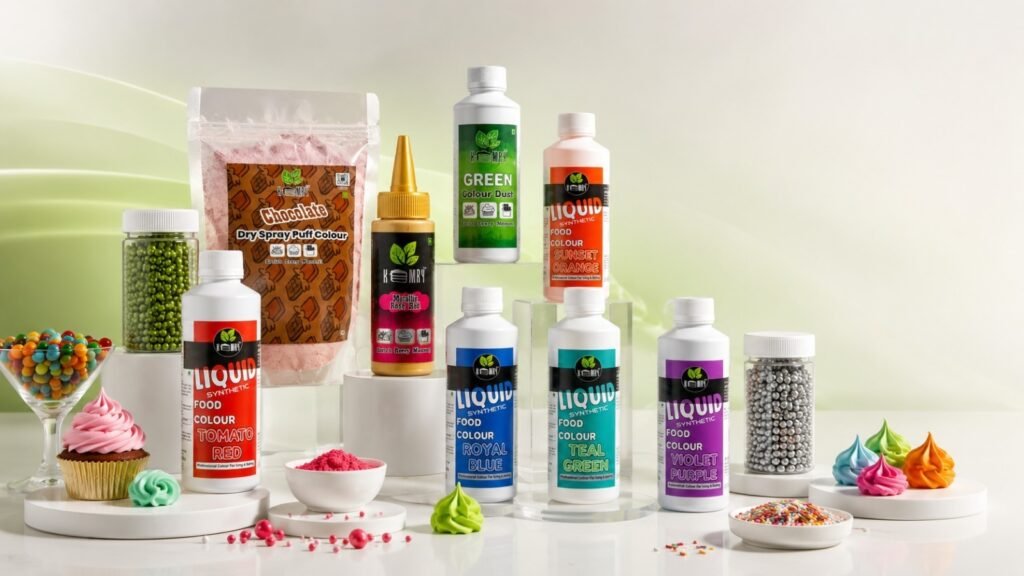
KEMRY by Jinoyal Industries offers its customers the following products: luster dust, liquid food colors, metallic colors, dry color dust, decorative sprinkles, sugar balls, and vermicelli. To use the materials more efficiently, one should know some information about them.
To know more about kemry by Jinoyal follow us on Instagram .
Why Dessert Presentation Matters
Sometimes people pay attention to how dessert looks before they try it. The cake decoration materials of the product will help people understand its theme, occasion, and style before tasting it cake decoration materials.
Imagine that there are two cupcakes with the same recipe. The first one has no decoration, but the second one has appropriate colours and sprinkles on it. Both cupcakes could taste great, but only the second one will have its own special look.
With the help of decoration, companies can:
- Create products which can be used at birthdays, weddings, festivals, and other occasions.
- Create a visual style for all the desserts in their assortment.
- Provide different styles for the same recipe.
- Increase the visual appeal of their products.
Try different seasons’ themes and preferences of the clients.
The most important thing is not to decorate a dessert too much. It should just complement the product, not distract from it.
Essential Cake Decoration Materials That Make a Difference
Different cake decoration materials produce different effects. Some add colour, others introduce texture, and some create a distinctive finish. Choosing the right material begins with understanding the result you want.
1. Luster Dust for Elegant Finishes
Luster dust relates to decorative treatments which impart a slight sheen or metallic look. It depends on the product being used and the technique applied to obtain a desired visual effect.
A wedding-themed cake could use gold-colored accents strategically placed, while the Christmas theme could feature silver or bronze accents in a decorative chocolate arrangement.
Useful applications of luster dust include:
- Highlighting certain decorative accents.
- Creating a color scheme.
- Creating contrast against dark backgrounds.
- Enhancing the look of certain confectionary decorations.
Practical tip: Test the finish on a sample before decorating a complete batch. The cake decoration materials result can vary depending on the surface, application technique, and product formulation.
Always check the product label. Materials marked for decorative purposes only must not be assumed to be edible or suitable for direct application to food.
2. Liquid cake decoration materials for Vibrant Designs
cake decoration materials is vital in designing desserts. Color can aid in portraying themes, creating contrasts, and providing consistency within product ranges.
Food colors in liquid form may be applied for various purposes like coloring selected cake mixes, icing, cream, and other confectionery preparations, provided that the recipe is right for the intended purpose.
For instance:
- Pastel colors can fit well with celebration cakes.
- Vivid colors can match children’s party themes.
- Matching colors can complement festive desserts.
- Well-selected colors can ensure consistency in the product range of the bakery.
- The company profile of KEMRY describes food colors in liquid form for uses such as cakes, icing, cookies, ice cream, confectionery, sweets, syrups, jams, and jellies.
Practical tip: Begin with a small quantity and adjust gradually according to the product instructions. Record the amount used in each batch when shade consistency matters.
3. Metallic Colours for Distinctive Visual Effects
Metallic colors can add a striking touch or give a finished look to an item where they are used in appropriate situations.
A dessert that has only one color as its base can have a metallic touch, and a group of theme-based confectioneries can include the same colors in each item.
The use of the colors depends on the particular formulation and application intended. In any case, where color is applied to food, make sure that it has been tested for such application.
It is important for businesses to test the color on their actual production surface. A cake decoration materials which looks good on a sample may look different in bakery conditions and photos of products.
4. Decorative Sprinkles for Texture and Personality
Decorative sprinkles provide a variety of options when it comes to adding colour, shapes, and textures to desserts. They allow a product to be fun, festive or just visually appealing, without using complex decorating techniques.
Different shapes and cake decoration materials mixes may fit different themes.
For example:
- Rainbow sprinkles will go well with colorful cupcakes.
- Matching sprinkles will help celebrate birthday cakes.
- Star decorations can match celebration theme designs.
- Specific colour mixes can help the bakery establish its unique identity.
KEMRY’s Company Overview offers many types of decorative sprinkles, such as balls, rods, hearts, stars, multicolored mix, etc.
Tip: Pick a colour scheme before decorating. Two or three matching cake decoration materials work better than all possible shades mixed together.
Also think about the dessert’s moisture content and how and when it should be served.
5. Sugar Balls for Shape and Dimension
Shape and dimension are introduced to desserts through the use of sugar balls. Sugar balls can be arranged singly, in patterns, and in combination with other decorative elements cake decoration materials
For instance, a cake with a smooth frosting can feature a small group of sugar balls to serve as its highlight. Cupcakes can also have a similar arrangement to ensure uniformity.
Some things to consider when choosing sugar balls include:
- Size and location.
- Contrast between color and base.
- Theme of the decoration.
- Texture and suitability of the completed product.
- Purpose of the particular product in terms of whether it is meant to be eaten.
- Careful arrangement tends to work better than covering the entire surface.
6. Vermicelli for Colour and Texture
Vermicelli can be utilised in cake decoration materials confectionery products with fine lines, color, and texture as needed. Vermicelli is especially helpful in designs where there is a need for even distribution of the decorations or a traditional bakery-style finish.
It may be compatible with cakes, cupcakes, and other confectionery products, depending on the product formula and purpose.
There are multiple vermicelli colors available at KEMRY, including custom options. Companies should verify current color range and minimum order quantities with the company.
There are three ways of choosing the right ingredients for a dessert:
- Base: Cake, chocolate, cookie, or any other confectionery product.
- Color: Color which will define your design.
Finishing touches: Any sprinkle, accent or decoration to complete your dessert.
A typical example is a white celebration cake which would require only one main color and several accents or decorations.
How Bakeries Can Choose the Right Cake Decoration Materials
For a business, selecting decoration materials involves more than appearance. Product suitability, consistency, availability, and supply requirements also matter.
Consider the Intended Application
Start by identifying where the material will be used. A product intended for external decoration may not be suitable for mixing into batter, icing, or other food preparations.
Review the product documentation and confirm any restrictions before placing a bulk order.
Check Colour and Batch Consistency
If a bakery produces the same design regularly, consistent colours and finishes can help maintain a recognisable appearance.
Test a sample under the conditions used in production. Keep records of the product, shade, application method, and quantity used.
Review Packaging and Order Requirements
Packaging and order quantities should match the business’s consumption rate and storage arrangements.
Before purchasing, confirm:
- Available pack sizes.
- Minimum order quantities.
- Storage and handling instructions.
- Current availability of required shades.
- Delivery timelines and repeat-order arrangements.
These checks can help reduce avoidable waste and production delays.
Verify Quality and Food-Safety Documentation
Businesses should review relevant product specifications, ingredient information, labelling, and applicable compliance documentation.
For cake decoration materials and decorations intended for consumption in India, consult applicable Food Safety and Standards Authority of India (FSSAI) requirements and verify that the individual product is suitable for its intended use.
A company’s general certification should not be treated as proof that every product is edible or approved for every application.
Why Choose a Reliable Decoration Materials Manufacturer?
A good supplier can enable firms to better meet their decoration material needs. The proper collaboration should be founded on product suitability, clear specification, constant communication and regular supply.
The product range of KEMRY from Jinoyal Industries includes confectionery cake decoration materials such as luster dust, liquid food colours, metallic colours, dry colour dust, sprinkles, sugar balls and vermicelli.
The company information indicates a commitment to quality, competitive prices, punctual delivery, and the ISO certification for food safety management systems.
If a firm is interested in KEMRY then the next step would be to find out more about their particular needs. They should ask about the products they have, their application, pack size, shades available, minimum order quantity and documentation.
In this way, the purchaser will find out whether the product range will suit their production process rather than the look of it.
Visit Us To know More About Kemry .